The Trade-off Between Physiological Authenticity and Experimental Convenience: Navigating the Cellular Foundation of Life Science Research
WUHAN, HUBEI PROVINCE, CHINA, February 15, 2026 /EINPresswire.com/ — In the complex landscape of life science research, selecting the right cellular model is a foundational decision that dictates the trajectory of scientific discovery. This article provides a comprehensive comparison between primary cells—the “original blueprints” harvested directly from living tissue—and immortalized cell lines, the “perpetual motion machines” of the laboratory. By analyzing the core differences in genetic fidelity, functional integrity, and life cycles, we explore the critical trade-off between the authentic biological relevance of primary cells and the cost-effective scalability of cell lines. Drawing on nearly twenty years of expertise from the Primary Cell Research Center at Cloud-Clone Corp., this guide offers researchers a strategic roadmap for choosing the optimal “cellular partner” to bridge the gap between benchtop experiments and clinical translation.
In a life science lab, a researcher’s first critical choice isn’t about the experiment itself, but about their fundamental “cellular partner.” This pivotal decision forks the research path: one leads to the “original blueprint of life” harvested directly from living tissue—primary cells; the other, to the laboratory-adapted “cellular perpetual motion machines”—cell lines.
As core research tools, how do primary cells and cell lines truly differ? This choice transcends mere experimental materials; it touches on the very essence of scientific inquiry: the trade-off between unlimited convenience and limited authenticity. The Primary Cell Research Center of Cloud-Clone Corp., a leader in primary cell R&D, provides the answers.
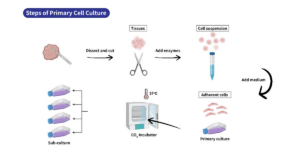
Fig 1 Schematic Diagram of Primary Cell Preparation
The Original Blueprint: Primary Cells
The journey of a primary cell begins with life itself. At Cloud-Clone, this process is core to the technical team’s daily work. Technicians obtain fresh tissue samples, like liver, lung, heart, or tumor, from operating rooms or animal centers. These samples are swiftly transferred to GMP-grade cleanrooms, initiating a delicate “cell rescue” mission. Using self-optimized collagenase to digest the tissue, target primary cells are purified and selected, finally finding a new “home” in customized culture media.
These cells have never undergone immortalization or endless passaging. They maintain their pristine biological memory: the donor’s unique genetic background, precise cell-to-cell communication, and functional characteristics closest to the in vivo state. Beating cardiomyocytes, drug-metabolizing hepatocytes, signal-transmitting neurons, they continue to perform their native functions in culture.
However, this “authenticity” comes at a cost. Primary cells have a limited number of divisions, making each study a race against time. Variations between cells from different donors also place higher demands on a researcher’s data interpretation skills.
The Laboratory Legend: Cell Lines
Cell lines represent a legend of “evolution” and “adaptation.” They typically originate from a successful primary culture but bypass the natural division limit through spontaneous mutation or artificial intervention, achieving immortality. The most famous is the HeLa cell line, derived in 1951 from cervical cancer patient Henrietta Lacks, still used widely in labs worldwide today.
When approaching the “Hayflick Limit,” cells can be immortalized via methods like SV40 virus transfection, becoming limitless “cell factories.” If primary cells are the “original code of life,” cell lines are the “legend of immortality” crafted in the lab.
Three Core Differences: Genetic Fidelity, Functional Integrity, and Life Trajectory
1. Genetic Fidelity
Primary cells faithfully retain the donor’s genetic and epigenetic profiles. Their natural heterogeneity mirrors the true in vivo state. They follow a finite lifespan, aging and dying naturally.
Cell lines undergo genetic reprogramming during long-term culture, becoming homogenized. They may accumulate mutations and experience genetic drift, gradually deviating from the original phenotype—e.g., liver cancer cell lines losing albumin synthesis capacity, or breast cancer cell lines losing estrogen receptor expression. Regular authentication is vital to prevent misidentification. Chromosomal abnormalities and contamination risks (historically, some “prostate cancer lines” were actually HeLa cells) can compromise data reliability, underscoring the need for regular authentication.
2. Functional Integrity
Think of cells as “workers.” Primary cells are master craftsmen: liver cells excel at drug metabolism via a complete cytochrome P450 enzyme system, heart cells at rhythmic contraction, neurons at electrical signaling.
Cell lines are versatile generalists, but often show significantly reduced activity, potentially skewing toxicity assessments. They may lose some specialized functions but gain prowess in rapid proliferation and adaptation. In drug metabolism studies, primary hepatocytes maintain a complete cytochrome P450 enzyme system for accurate prediction of human metabolic pathways, whereas the common HepG2 cell line shows significantly reduced activity, potentially skewing toxicity assessments.
3. Life Trajectory
Primary cells follow a complete lifecycle: isolation – adaptation/expansion – functional prime – senescence – death. Each stage holds research value.
Cell lines embark on a perpetual loop: immortalization – infinite proliferation – routine passaging. This offers convenience for large-scale experiments but forfeits the dimension of a natural life course.
How to Choose: Align with the Research Goals
Lean towards Primary Cells for: Preclinical toxicology, personalized drug sensitivity testing, and translational research where clinical relevance is paramount.
Lean towards Cell Lines for: Exploratory studies, high-throughput compound screening and technology development.—scenarios sensitive to throughput and cost.
Today, many labs adopt a dual-platform strategy: using cell lines for rapid mechanistic validation, primary cells for biological relevance confirmation, and patient-derived primary cells for translational potential assessment, striking a balance between efficiency and authenticity.
Sourcing: Convenience vs. Investment
For Primary Cells: Researchers often face a steep learning curve in isolation and culture techniques—a time- and resource-intensive process. The alternative is commercial sourcing. Derived directly from organisms and requiring high technical expertise, specific growth factors, and having a finite lifespan, primary cells are inherently high-value. Their cost reflects the donor source, technical complexity, and specialized media. Beware of budget options: some researchers have reported wasted years after discovering their “primary cells” were misidentified cell lines.
For Cell Lines: Sourcing is far easier. They can be obtained at low cost from repositories like ATCC or national cell banks, or even shared between labs. As infinite “factories,” their cost is essentially that of the culture media.
Figure 2 Primary Cells from Cloud-Clone
Cloud-Clone: Deep Expertise in Primary Cells, Powering Scientific Innovation
With nearly two decades in primary cell R&D, Cloud-Clone Corp. operates a premier preparation platform staffed by specialized experts. The company has built a product system encompassing over 540 primary cells from over ten kinds of animal species (including mice, rats, rabbits, dogs, cats, goats, guinea pigs, etc.), covering tissues from the digestive, circulatory, nervous, and other systems. As a certified global exporter, Cloud-Clone aids in disease mechanism elucidation and drug screening in dozens of countries worldwide.
Beyond providing high-quality primary cells, Cloud-Clone offers end-to-end technical support—from experimental design and cell selection to culture protocols and data interpretation. Notably, it is one of the few companies certified to export primary cells, serving researchers in dozens of countries worldwide, aiding in disease mechanism elucidation, drug screening, and therapeutic development.
Conclusion
Primary cells and cell lines are like two different partners on the research journey: one leans toward the truth of life, the other offers experimental convenience. When choosing, return to the fundamental question: Do you seek in vivo-like authenticity or stable, reproducible conditions?
Cloud-Clone Corp. remains dedicated to refining and innovating primary cell technologies, providing the global scientific community with more reliable, physiologically relevant cellular models. On the path of life science exploration, we aim to be your most trustworthy “cellular partner.”
Goya Guo
Cloud-Clone Corp
+86 139 8611 6348
email us here
Visit us on social media:
LinkedIn
Legal Disclaimer:
EIN Presswire provides this news content “as is” without warranty of any kind. We do not accept any responsibility or liability
for the accuracy, content, images, videos, licenses, completeness, legality, or reliability of the information contained in this
article. If you have any complaints or copyright issues related to this article, kindly contact the author above.